
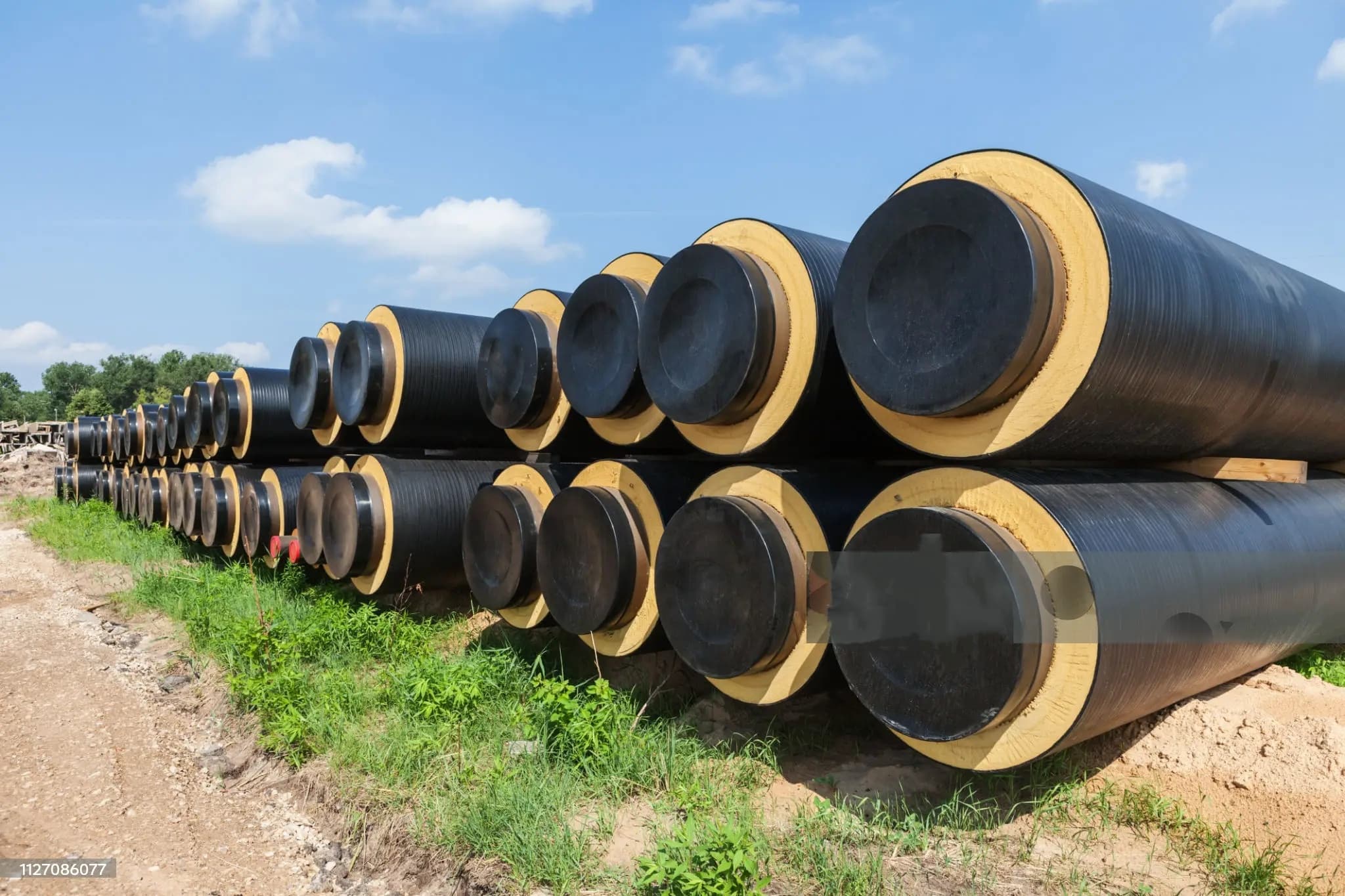
QH-6207 Pipeline Insulation
QH-6207 High/Low Temperature Resistant Pipeline Insulation Rigid Foam Polyether (Suitable for Extreme Temperature Pipelines)
1. Description
This product is a special rigid foam polyether polyol for extreme temperature pipeline insulation, made from glycerol and propylene glycol via special polymerization, added with high/low temperature resistance modifiers and anti-brittle agents. It is a light yellow to yellow viscous liquid, with good low-temperature fluidity and high-temperature stability, can foam normally in the range of -170~120℃, and the foamed product has excellent extreme temperature stability, dimensional stability and thermal insulation performance. It has strong bonding force with various pipeline substrates, no brittle fracture at low temperature and no deformation at high temperature, and is suitable for the insulation of low-temperature fluid pipelines, high-temperature steam pipelines and other extreme temperature pipelines.
2. Specification
| Item | Index | Test Method |
| Appearance (25℃) | Light yellow to yellow viscous liquid, no mechanical impurities | Visual inspection |
| Hydroxyl Value (mgKOH/g) | 420-480 | GB/T 12008.3-2009 |
| Viscosity (25℃, mPa·s) | 1500-2200 | GB/T 12008.7-2010 |
| Moisture (%) | ≤0.15 | GB/T 12008.6-2010 |
| Acid Value (mgKOH/g) | ≤0.10 | GB/T 12008.5-2010 |
| Functionality | 4-5 | Chemical titration |
| Foaming Density (kg/m³) | 40-50 | GB/T 6343-2009 |
| Operating Temperature Range (℃) | -170~120 | Simulated working condition test |
| Dimensional Stability (-170℃/120℃, 48h) | ≤1.0% | GB/T 8811-2015 |
| Bonding Strength (Extreme Temperature, kPa) | ≥180 | GB/T 8813-2021 |
| Compressive Strength (MPa) | ≥0.22 | GB/T 8813-2021 |
3. Application
Core application scenarios:
- Low-Temperature Pipeline Insulation: Thermal insulation of low-temperature fluid transportation pipelines, refrigeration pipelines, and cryogenic storage tank connecting pipelines in cold chain, chemical and medical fields, preventing pipeline frosting and heat loss, and ensuring stable operation at low temperature.
- High-Temperature Pipeline Insulation: Insulation of high-temperature steam pipelines, industrial boiler pipelines and high-temperature fluid transportation pipelines in power plants, steel plants and chemical plants, reducing heat loss and preventing scald accidents.
- Extreme Environment Pipelines: Insulation of pipelines in polar regions, high-temperature deserts and other extreme environment areas, adapting to large temperature differences and harsh working conditions, with excellent environmental adaptability.
- Extended Applications: Insulation of special pipelines such as aerospace ground test pipelines and deep-sea pipeline systems, meeting the special temperature and performance requirements of the industry.
- Construction Instructions: Mix with high/low temperature special isocyanate at 1:1 (25℃), suitable for factory prefabrication and on-site spraying. For low-temperature pipeline construction, avoid freezing during operation; for high-temperature pipeline construction, pre-cool the pipeline surface to ≤50℃. Construction temperature: ≥-10℃, humidity <75%; the foam curing time is ≥48h at low temperature and ≥24h at high temperature. Comply with GB 50264-2013 and GB 50404-2017.
4. Storage
- Storage Environment: Cool, ventilated warehouse (5-30℃), strictly avoid extreme temperature (no freezing or high temperature exposure), keep away from fire and heat sources, and equipped with fire-fighting and explosion-proof facilities.
- Packaging: 200L sealed iron drums, marked with "High/Low Temperature Resistant", "Pipeline Insulation Special" warnings and product information, and labeled with temperature control requirements during storage and transportation.
- Shelf Life: 6 months; if frozen or exposed to high temperature during storage, it can be restored to room temperature naturally (no heating or forced thawing) and tested for performance before use.
- Transportation: Take strict temperature control and insulation measures, avoid transportation in extreme temperature environments, handle with care, do not mix with oxidants and acids, and comply with national transportation regulations.
- Others: Wear protective equipment during operation; rinse with water immediately if in contact with skin; properly dispose of waste materials and packaging drums to avoid environmental pollution; store separately from ordinary pipeline insulation polyether to prevent mixing.

Interested in this product?
Get in touch for more information, pricing, or custom requirements.